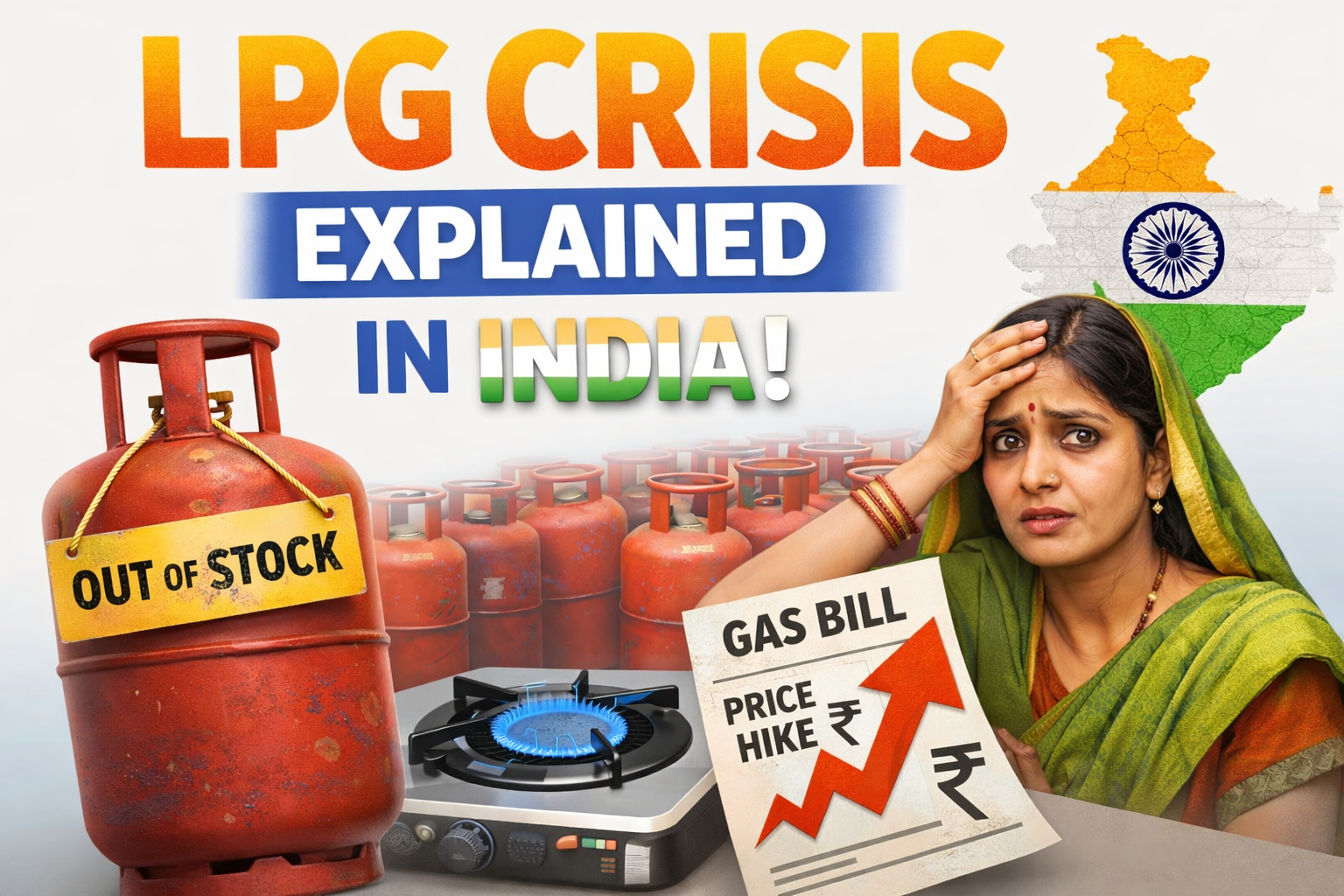
Liquefied Petroleum Gas (LPG) is one of the most important household fuels in India, used by millions of families for daily cooking. Recently, reports and social media discussions about an “LPG shortage” have created confusion among consumers. Many people are worried about whether they will be able to get cooking gas cylinders on time.
However, it is important to understand the real situation based on official government statements and verified facts. This article explains the truth behind the LPG supply concerns in India and what the government is doing to manage the situation.
What Is LPG and Why It Is Important in India
LPG is a clean cooking fuel used widely across India. Over the last decade, government initiatives such as the Pradhan Mantri Ujjwala Yojana have expanded LPG connections to millions of households, especially in rural areas. Today, India has over 330 million LPG consumers, making it one of the largest users of cooking gas in the world.
Because of this massive demand, India relies not only on domestic production but also on imports to meet its LPG needs.
Is There Really an LPG Shortage in India?
According to the Government of India and oil marketing companies, there is no shortage of LPG for domestic household consumers. Authorities have repeatedly assured citizens that cooking gas supplies remain stable and that distribution networks are functioning normally.
Officials have clarified that:
- LPG cylinders for households are being delivered normally.
- Average delivery time remains around 2–3 days after booking.
- Oil companies have sufficient stocks to meet domestic demand.
The government has also asked people not to panic or rush to book multiple cylinders, as panic buying can create unnecessary pressure on supply systems.
Why Are People Hearing About an LPG Crisis?
The confusion mainly comes from temporary disruptions in commercial LPG supply, which is different from the domestic LPG used in homes.
Some restaurants, hostels, and commercial kitchens have reported difficulty in getting commercial LPG cylinders. This has led to media coverage and social media discussions that created the impression of a nationwide shortage.
However, the government clarified that domestic cooking gas for households remains the top priority, and supply for homes continues without major disruptions.
Global Factors Affecting LPG Supply
One of the key reasons behind the recent concerns is the global energy supply disruption, especially in the Middle East.
India imports a large portion of its LPG requirements, and geopolitical tensions in West Asia have affected shipping routes and fuel supplies.
Since the Middle East supplies a significant share of LPG imports, any disruption in that region can temporarily impact supply chains. To reduce this risk, India has started sourcing LPG from alternative countries such as the United States, Norway, Canada, and Russia.
This diversification helps ensure that households continue receiving LPG without major interruptions.
Government Measures to Protect LPG Supply
To maintain stable supply for citizens, the Government of India has taken several important steps.
1. Increasing Domestic LPG Production
The government has directed oil refineries to increase LPG production by around 25% to compensate for any disruption in imports.
2. Prioritising Household Consumers
Authorities have instructed oil companies to prioritize LPG distribution for households and essential sectors such as:
- Hospitals
- Schools
- Government institutions
Commercial users may face temporary restrictions to ensure that families continue to receive cooking gas.
3. Monitoring Black Marketing and Hoarding
Local administrations and enforcement agencies have been asked to monitor LPG distribution and take action against illegal storage or black marketing of cylinders.
4. Expanding Import Sources
India is diversifying LPG imports to reduce dependence on any single region and strengthen long-term energy security.
Impact on Commercial Sectors
While domestic households are largely protected, some commercial sectors such as restaurants, hotels, and industrial kitchens have experienced supply constraints.
In some cities, eateries have temporarily reduced menus or switched to alternative cooking methods.
This is mainly because available LPG supplies are currently being prioritized for residential users and essential services.
Should Consumers Be Worried?
Based on official statements from the government and oil companies, there is no need for panic among domestic LPG consumers.
Authorities have emphasized that:
- LPG deliveries are continuing normally.
- Supply systems remain operational.
- Additional production and imports are being arranged to maintain stability.
Consumers are encouraged to book cylinders only when needed and avoid spreading or believing unverified information.
Conclusion
The recent discussion around an “LPG crisis” in India is largely due to temporary supply disruptions and global energy challenges, rather than a complete shortage of cooking gas for households.
The Government of India has already taken multiple measures, including boosting domestic production, prioritizing household supply, and diversifying imports, to ensure that millions of families continue to receive LPG without disruption.
For now, the key message from authorities is clear: there is adequate LPG supply for domestic consumers, and there is no reason for panic.